
Leadership
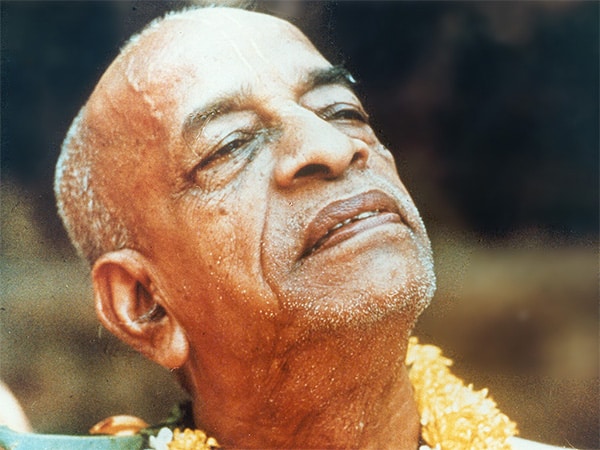
Krsnacandra Dasa - Vrndavan: The understanding of leadership is needed to be carefully studied. Leadership is an organic process that is afforded to individual who have the necessary qualities to lead. However, in the modern world leadership is a position that one assumes. This position is given by the organization or society on various bases that are more political than qualification dependent. By qualification it is meant ones qualities to lead as opposed to credentialism and/or professionalism.
Within the ISKCON hierarchy one assumes a position according to the person’s ability to be a team player and not due to their innate qualities and level of spiritual realization.
Here at PrabhupadaVision.com we believe that in the general body of devotees there are many good and qualified leaders who have not been given the opportunity to lead as the present corrupt ISKCON leadership oligarchy has a monopoly on all leadership positions within ISKCON.
It is also understood that a good leader is also in possession of a good intelligence. Therefore many good leaders within the general body of devotees are wise enough to know that the leadership of ISKCON has been corrupted and they ‘naturally’ distance themselves from this corruption.
As we know, in attempting to solve problems one must first discern that there is in fact a problem and once that is accomplished then half the battle is won. Now in ISKCON, I believe, we have recognised that there are in fact problems within our movement. We also understand that our problems do not only arise from external factors but also as a product or symptom of some form of dysfunction within our organisation.
The next logical step would be to try and understand more specifically the exact nature of the problems, seek out their root causes and make the adjustments required to change in order to affect an appropriate and feasible solution.
This document presents a process for identifying the root causes of our problems and attempts to discuss what is needed in order to change the present situation.
- ‘Systems theory’ is that ‘the part does not operate separately from the whole’.
- Further that the practical application of authority and leadership is descending as opposed to ascending.
- Of most importance is that the mood of our interactions (sat sanga) is in the mood of Bhakti.
- Motivation
- Knowledge
- Power
- By qualities it is understood by Sastra as being the persons varna.
- By accomplishments it is understood to be the actual fruits of their activities.
- Bureaucracy: The base is where law is found. This law is there to protect the members of the community but it is impersonal and impartial. It is enforced by rules and punitive measures that are not based on justice but in many cases on argument and precedent. This type of society is based on sophistry. If this system breaks down by the election of unqualified governments, the members of the community are left to the wiles of unscrupulous individuals within the bureaucracy. There is little protection for the individual within this system.
- Dharma: The middle is where justice is found. Justice is dharma. Here there is law but it is based on correct (Sastric) principals and enforced by the ‘idea’ of justice. Here are found the adherents of Varnasrama dharma. The individual is protected by a community that is based on the absolute truth.
- Bhakti: The topmost is bhakti where there is law and justice but the way that it is enacted is with love in relationship to the object of that love, Krsna. ISKCON is meant to use bhakti as its operating principal. Srila Prabhupada wanted his movement to be run on love, trust and affection.
- To develop relationships based on bhakti with devotees in relationship to Krsna.
- To give the holy name, Srila Prabhupada’s books and prasadam to the non devotee.
- When we speak of someone being ‘motivated’ we think in terms of what they personally hope to achieve when they act in a certain way. In order to be a good leader ones motives must be to benefit others, ISKCON, Srila Prabhupada and Krsna. They must have the desire to protect according to their varna. If ones motives are to gain something personally such as; fame, admiration, money, position etc then one can understand that the person’s motives are not pure.
- Emotional maturity is another factor that we must take into consideration when discussing motivation. Ones motives are usually based on some emotional imperative. That is we can act and/or think out of fear, love, hate, compassion etc. Emotions and our ‘desires’ are what shape and provide the impetus (inspiration) for our motives. Our desires are based on what we ‘feel’ about something.
- The greater degree that we feel about something, the impetus to act on that feeling increases. For example one may feel angry and frustrated about how they were never listened to as a child and so when they are not listened to as an adult they may feel the same way, but they are more able to do something about it. They may seek a position where they will have to be listened to. Of course this is rather simplistic but it only serves to illustrate the point.
- The results of someone acting out of fear, hate, envy, frustration etc, will be necessarily negative and therefore counter-productive, so it goes without saying that a person acting out of love, compassion etc will be positive and therefore productive.
- Sincerity is another factor involved in motivation. That is if one is motivated out of negative reasons then ones sincerity will not be pure. When we speak of sincerity we speak of ones desire to engage in loving service to the Lord and His devotees without personal (material) envy or personal (material) motivation. That is to give without seeing the act of giving as a transaction based on the desire to ‘take’ or ‘receive’.
- Srila Prabhupada has said that we must do like this and be able to discern what in fact we are doing with regards to that particular instruction.
- To apply Srila Prabhupada’s instructions, one must have the proper philosophical orientation. Here one must be able to discriminate the difference between applying ‘Vedic’ as opposed to western thought to the application of Srila Prabhupada’s instructions.
- It is imperative that we differentiate between our Judaic-Christian / Hindu backgrounds and the Vedic perspective in order to properly implement Srila Prabhupada’s instructions.
- If we fail to do so then we shall simply implement processes, programs and policies that are coming from the western mind set and not the Vedic.
- When Srila Prabhupada instructs us to open a Gurukula to educate our children we open a western style and focused boarding school. Then through failing to achieve the desired goals after the improper application of Srila Prabhupada’s instructions we will see more and more attachment to the social and cultural milieu of western consciousness as directly opposed to the Vedic.
- When some educators are questioned on their position they sincerely believe that they are doing what Srila Prabhupada had instructed them to do. Or:
- They believe that the use of western educational accreditation process is acceptable by Srila Prabhupada as, in their assessment, it does not severely interfere with the child’s Krsna Consciousness. They make that distinction even though Srila Prabhupada has instructed them not to use it. Or:
- They have decided to use western ethos as Srila Prabhupada had given us the ability to adjust things as he has left some of the details of his instructions up to us. Even though he made no such distinction with education.
- However, the persons ‘actual’ motivation is what really matters in the makeup of a leader.
- Again, as with Srila Prabhupada, devotees will always ‘trust’ Srila Prabhupada as he is so pure in his sincerity to serve his guru and Krsna. Trust is also there in the other aspects (knowledge and power) but it is in the sincerity of the leader that trust is actually based.
- Love can be understood by the term ‘caring for others by serving them’. This is another comprehensive topic and one that also needs further study within our movement. One of the symptoms of a lack of love and/or correct application of love is comments from the rank and file, regarding our leaders, such as ‘they don’t care'... So caring for ones followers, what to speak of all living entities is also an aspect of Srila Prabhupada that is unquestionable.
- True power is the application of Sastric knowledge according to principals given by Srila Prabhupada’s instructions and based in bhakti,
- As opposed to the use of knowledge and position (both spiritual and mundane) to force or coerce compliance. The later is the use of knowledge as a weapon as opposed to an anga of bhakti.
- Wisdom is true power. The ability to cognize and assimilate the result of the application of knowledge applied according to Sastral injunction, is true power.
- A leader does not use force in dealing with others but acts in a consultative manner.
- The use of force only serves to alienate others as opposed to endearing and therefore bringing out the best in them.
- Someone talking ‘at’ or ‘to’ another person as opposed to talking ‘with’ them. When a leader uses position and knowledge to talk ‘at’ or ‘to’ a person it places the person in a ‘subordinate’ position which is necessarily disempowering. The adverse of that is talking ‘with’ a person which is more consultative and therefore places the person on a higher platform and serves to empower the person.
- This is an important aspect of power and it requires that the leader is non envious and confidant in their position in order to hand over responsibility.
- It also means that the leader must be astute enough to evaluate the qualities of the person they delegate with responsibility.
- The Brahmans providing the ‘Top level management - Leadership
- The Ksatriyas providing the middle level management - Administration
- The Viasyas lower middle level management – Farming and Financial Support
- Sudras lower level management positions within our movement – Directed service
- The Brahman may be any of these personalities but they will be truthful and act with integrity at all times. They will never lie or evade the truth or be involved in activities that are dishonest. They will be clean both of appearance and externally they will live in clean and tidy areas. They will be involved in researching and advising others on both material and spiritual solutions for their lives or working with Ksatriyas or Viasyas by giving them advice on their respective duties. All of this will be done in relationship to guru, sadhu and Shastra.
- The Ksatrya will also have various personalities; however, will be always engaged in looking after people and making sure that they are protected in all areas of their life. They will find it easy to listen to advice from learned people and never back down from protecting innocents. They will not be as studious as the Brahman for they will not have the need as they will be easily advised by the learned. Not only will they act with integrity and strength of character and arms for the protection of all people but also all living entities under their protection.
- The Vaisya will also have different personalities but they will be engaged in farming and cow protection or other such business. They will have wealth and will not have to toil too hard to obtain it. They will have an understanding of where that wealth comes from and therefore give some of it in charity and to look after their community. They will take advice from others and especially the Brahman and Ksatriyas. They will not be so interested in study but they will be interested in protecting the community as they recognize the role that they play in the community and therefore how a healthy community means a healthy supply of wealth. The Viasya will also act with integrity, they will be truthful but they will not be as truthful as the Brahmana and Ksatriya as they are required to bend the truth a little for the sake of making a profit.
- The Sudra is also of varied personalities. They have the qualities of being easily able to listen to instruction and carry them out. They are actually happier if they are given work to do rather than having to arrange for their own work and therefore financial security. The sudra is truthful to the degree that they are engaged in service but they do not have the ability to act truthfully if given too much responsibility. Therefore for them to assume the role of another varna one will see that they will not be able to act independently and have the integrity that the other varnas require. If they assume the position of another varna they are more likely to cover things up or ‘sweep them under the carpet’ so to speak as they do not have the internal resolve to speak the truth. They are also more likely to listen to bad advice for they have not made a thorough study of Sastra and therefore can be easily influenced.
- That we have worked our way up and therefore have done the time in order to be a leader
- That we possess mundane qualifications
- That we have many followers
- That we are an eloquent speaker.
- That we can recite many slokas or know Sanskrit
- That we are currently in the position of a leader
- Be courageous and look with sincerity into our own hearts and try and obtain the strength in order to see where our attachments are in relationship to:
- Position
- Securing Respect from others
- Fame and Admiration
- Perceived or desired abilities
- See that a leader is not necessarily a popular figure. They are someone who is given the position due to their innate qualities of leadership as described above.
- See that, we are properly situated within our correct varna and ashram.
- See that, we are at the very least attempting to be motivated out of love and sincerity.
- See that we are trying to learn and/or are acquiring and applying not only our own knowledge (gained through Sastra) and power, but also the knowledge, power and motivation of others…
Seven Habits of Highly Defective People
- Denial – They refuse or cannot see that there is a problem with either themselves or what they are doing.
- Blame (Scape-goating) - They externalise the responsibility for problems and therefore blame others instead of trying to improve their own shortcomings.
- Silence – They put up a wall of silence in order to distance themselves from accountability for their inactions or actions.
- Deflection- They ‘focus’ attention away from the problem and onto some other activity or person in order to not be held accountable. Or they deflect the problem to someone else in order not to have to deal with it.
- Sophistry – They use pseudo rationalizations in order to bluff their way out of facing the real problem. Or they make excuses.
- Sob Storying- They claim to be a martyr by proclaiming that they are forced and therefore reluctant to take on the role that they are ‘acting’ in.
- Force – They use force and coercion in order to achieve compliancy.
Seven Habits of Highly Effective People
- Truthfulness – They have the courage and integrity to admit that they are wrong.
- Responsibility – They take responsibility for their position and any subsequent problems that arise.
- Communication – They communicate with others in order to better deal with duties, responsibilities and problems.
- Focus – They focus their attention on trying to solve problems and endeavour for improvement.
- Wisdom- They attempt to learn from past experience or utilise the knowledge and skills of others to deal with their duties, responsibilities and problems.
- Acceptance – They accept their role and position and therefore use it towards the betterment of others. They also accept the service of others in the application of their duties.
- Empowerment- they use love, trust and affection in order to develop healthy relationships with others in order to properly lead them.